We outline a variety of holiday combinations which we feel will enable you to capture and savour what this wonderful country has to offer. As ever, our holidays are very flexible so let us know how we can tailor the itinerary to your particular requirements.
Where we feel a modification is impossible to implement or too expensive, then we will find the best possible compromise. We haven't featured all the towns and areas in Chile. However, upon request we can normally book other hotels and places that are not featured on our website. If you do not wish to drive, we can organise private transfers or local flights between the different areas (quote upon request).
Accommodation at all hotels is on a bed and breakfast basis, (unless otherwise stated) based on two persons sharing a double/twin room with private facilities and where car hire is included sharing a Group C vehicle. Quotes for more than two persons on request.
If you have already organised your own international flights we are able to quote for land only arrangements, but these have to be for a minimum of 7 nights.
Currency
The unit of currency is the Chilean PESO (Ch$). At the time of writing there were approximately 516 Pesos to US$1. We recommend that you pay your hotel extras bills (i.e drinks, calls etc) with US$ dollars to try to avoid the 19% local tax. See the Financial Times for up to date information.
Visas
Travellers with British Passports do not need visas for Chile, but please ensure that your passport has at least 6 months to run. You will also be required to show your passport at the land border if you plan to cross over into Argentina, Peru or Bolivia. If you are a foreign national living in the UK, please ensure that you have all the correct papers before leaving the UK. If your paperwork is not in order, you will be refused entry back into the UK and fined a minimum of £2,000 per person and we cannot be held responsible for the consequences.
Language
Spanish is the spoken language. English is spoken by many so communication is generally not a problem.
Food & Drink
Chile’s varied and excellent cuisine features seafood, beef, fresh fruit and vegetables. The seafood is the real distinguishing factor including the delicious shellfish and conger eel stew! There are also many Italian, French, Mexican and Peruvian restaurants in the main towns.
$20 per person buys a decent 3 course meal - food in the regions can be even less, although the restaurants tend to be less sophisticated. Dinner in most places is served from 8pm onwards as Chileans tend to eat later - so have a big lunch! It is customary to tip about 10% of the bill. Chilean wines are South America’s best and rate amongst some of the finest in the world.
Vaccinations / Health
Almost none of the tropical diseases common in other Latin American destinations - such as Malaria, typhoid and yellow fever are a concern in Chile. However, you should always check with your local doctor for the latest health requirements no later than six weeks before your departure.
The heat and humidity of the tropics make you sweat profusely and can also make you feel lethargic (particularly in the north) - to avoid cramps and heat exhaustion it is important to maintain a high fluid intake and ensure that your food is well salted. Please ensure that you use bottled water (check seal is not broken) rather than using tap water. Government health policy requires people who have visited an endemic area for Yellow Fever (within 30 days prior to travel to Easter Island) to have a Yellow Fever vaccination certificate.
Driving
The main roads are good and some of the best we have seen in Latin America. Driving in the North and Chilean lake district is recommended which allows much greater flexibility and ease in reaching national parks and other remote places to which public transport is non-existent. It is recommended that the petrol tank is filled up at every possible opportunity as some of the distances between stations can be quite large! Petrol is approximately 1.5US$ per litre.
A special permit is required to take rented vehicles across the border into Argentina, Peru or Bolivia and you are also required to return with the same vehicle. Documents required are full driving licence and passport of the drivers. There is relatively little traffic once outside Santiago. Please note that the local police are very hot on speeding and will not hesitate in handing out a fine - you will be required to go to court on an appointed date. Please beware trying to pay on the spot, it will look as if you’re trying to bribe the police and you’ll probably get put in jail! (insurance does not cover you for this). Chile has several toll roads throughout the country. The charges range from 500-1,500 pesos per car.
Hotel Gradings
There is no official class or star structure for accommodation. Our accommodation is generally of a three to four star European standard but the remote lodges are simpler. All rooms have private facilities, but in the simpler lodges, the wash basins (not the showers) are with cold water only. Breakfasts usually comprise of toast, eggs, sandwiches, tea and powdered coffee.
Weather / When to Go
The country’s amazing geographical variety can make a visit rewarding in any season. December - February are, overall, the hottest months throughout the country. However, the seasons do vary by region. Northern Chile basically receives no rain at any time of the year (apart from the northerly coastline regions and the altiplanic winter which only affects the altiplano December - February) and is attractive at any time of the year. Santiago and Central Chile has a Mediterranean climate and is best in the spring (September until November) or autumn (February until April). The Lakes region and Torres del Paine National Park are best seen in their summer months (December until March). The climate on Easter Island is subtropical and therefore you can expect warm weather and bursts of torrential downpours. Summer time rains are typically short and violent while winter rains are longer and gentler. Easter island is cheaper and far less crowded outside the summer months.
Time
There is a period of 2 weeks in spring and 2 weeks in Autumn when the time difference is 4 and 3 hours respectively behind Greenwich Mean Time (GMT). The clocks go forward and back like the UK - therefore during the winter there is a 5 hour difference and in the summer it is 3. Easter island is 2 hours behind Chile mainland.
Recommended Reading
Chile guides published by Lonely Planet and Footprint, provide a useful insight into the country. Also recommended is Travel Guide: Chile Experience published by Turiscom. For those particularly interested in birding Mark Pearman’s Essential Guide to Birding in Chile is ideal.
White Water Rafting - a few facts
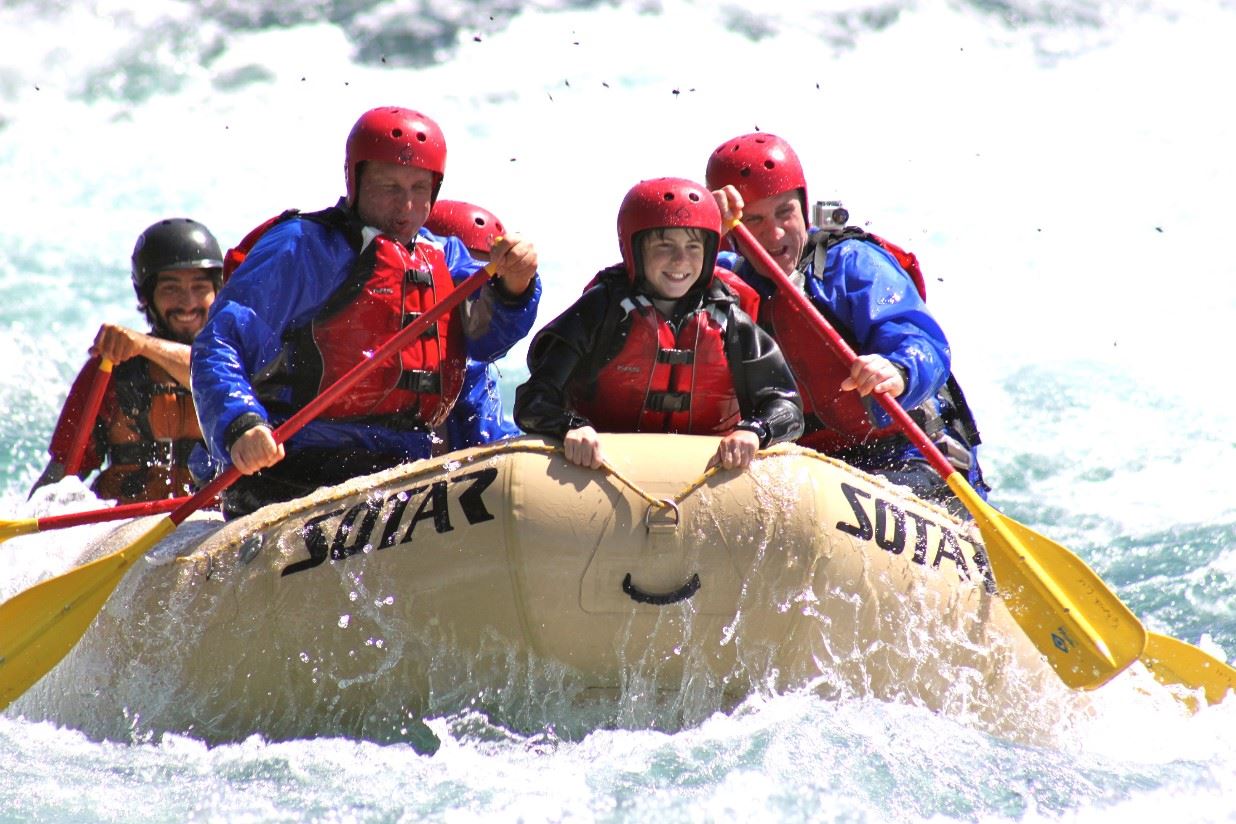
Running a river is an enjoyable adventure and a memorable part of your holiday. Our local agent in Chile has selected a reputable rafting company to ensure the necessary safety precautions are in place. However, you will get wet. You may even be tipped out of the boat during the trip (guide and raft-mates will help you back onto the raft!) and some light bruising is all part of the fun and to be expected!
Rivers are rated from Class I (flat water, considered a floating trip) to Class V (high waves, deemed suitable for experts only). No prior experience is necessary for class I to III runs. We would like to point out that rafting may not be suitable for poor swimmers or for those of a nervous disposition.
We normally book clients on level 3 rides unless otherwise instructed. Please note that our travel insurance only covers up to level 3. Clients wishing to book higher grades through Sunvil, will need to arrange adequate insurance cover independently and provide written proof as to having done so.
For more information please see the Chilean Embassy website >