By Andrew Eames, Journalist
Featured in The Times, 31 December 2025
Dominica, land of forests and mountains, is set to get an international airport and an exciting new cable car route. Go before everyone else does.
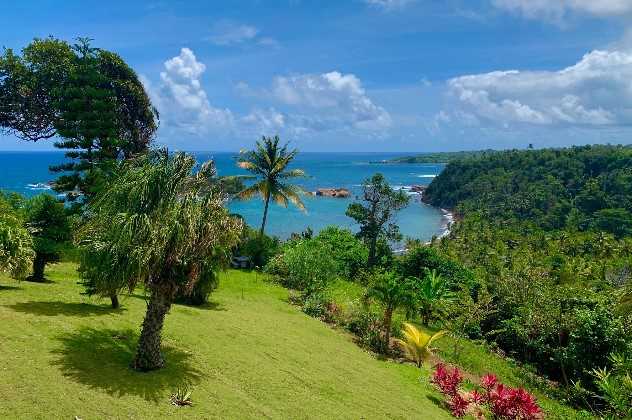
It was Sunday on the island called Sunday. Church was over and we were sitting in a rudimentary lunch stop called Islet View, high over Castle Bruce, looking down to where Atlantic rollers were ploughing into the bay. We hadn’t been to church ourselves — my driver-guide Marcus Gabriel said he was spiritual enough already — but we were feeling good about life nevertheless.
He and I had just ordered our lunch (£12 for marlin steak in creole sauce; guide.dm) when the pastor strolled in. He was robed in flowing white, with very expensive soft leather shoes. As he approached the bar he appeared to be reading from a book of prayer. We watched carefully, thinking benediction or donation, but he had obviously had a good collection already. He smiled at us benevolently, downed a large rum and floated out again.
The food came, and the pastor’s pick-me-up was soon forgotten. It was only afterwards that I thought how appropriate it was, on an island rather unimaginatively named Dominica by Christopher Columbus while sailing by on a Sunday in 1493, that I was doing my trans-island exploration on the Sabbath too.
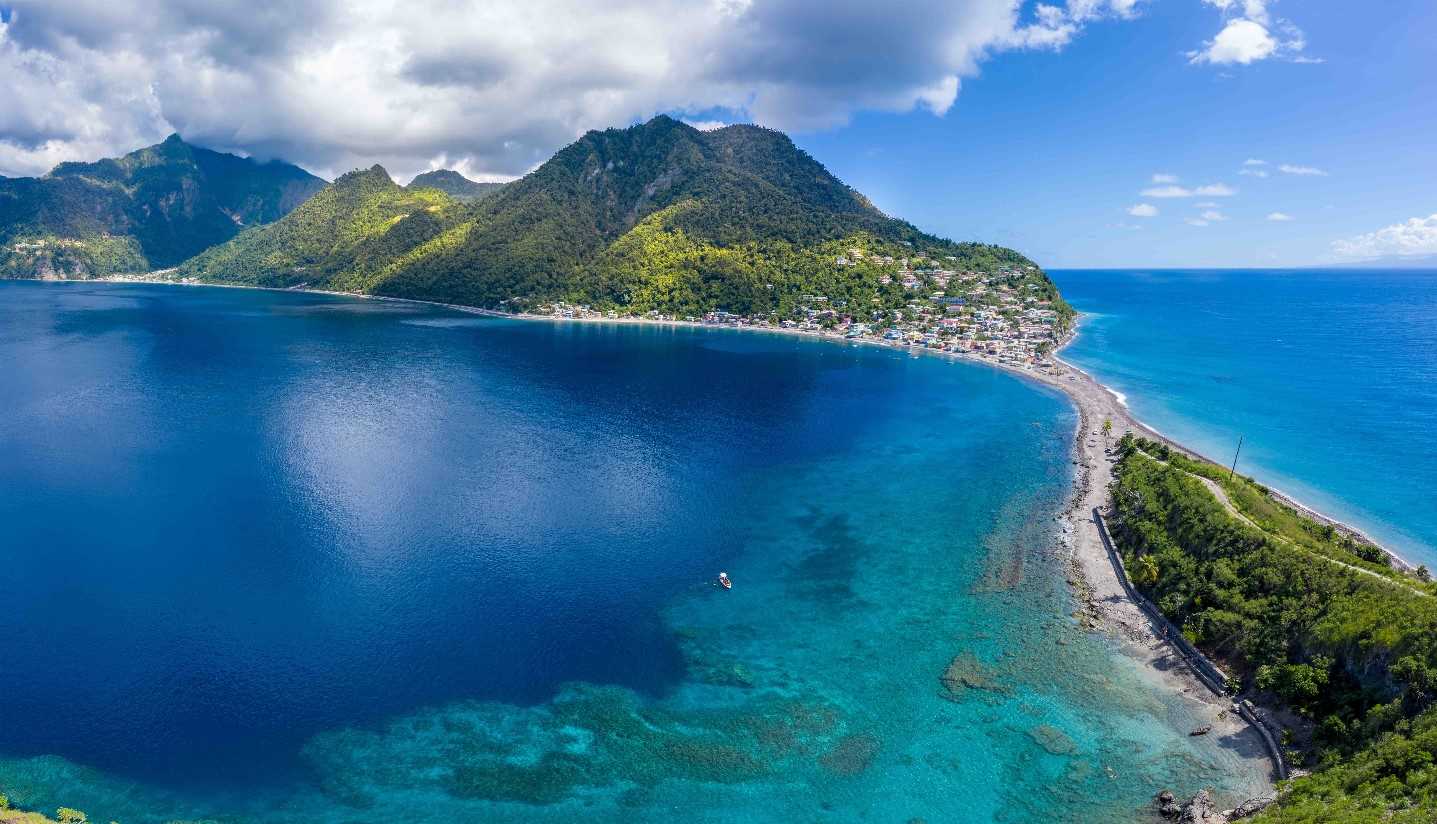
Dominica, not to be confused with the altogether bigger Dominican Republic, is a 30-mile long mountainous island that sits between Martinique and Guadeloupe. It has a chequered history, vacillating between English and French control before independence in 1978, and it is unusual among the Caribbean islands in that it still has an indigenous community, the Kalinago.
What you need to know
Where is it? Dominica is in the Lesser Antilles in the eastern Caribbean between Guadeloupe and Martinique
How to get there: The quickest way of getting to Dominica is via Barbados, connecting with InterCaribbean.
Insider tip: Although it is now the dry season (December to May) it does rain, often several times a day, in short, sharp showers. After which the sun steams everything dry. A lightweight waterproof is a must-pack. Being heavily forested and with few significant beaches, it is a rare destination for a public in search of Caribbean sun. But this may be about to change.
On my British Airways flight over to Barbados (where I changed to InterCaribbean to continue to Douglas Charles airport in Dominica) the in-flight videos started with a promotional film that rolled over Dominica’s lush rainforest to pick out its latest innovation. It’s an ambitious cable car ride to Boiling Lake, a remote volcanic lake that does what it says on the tin. Serious money was clearly being spent.
It was the news of this unusual investment, plus an imminent new international airport, that brought me to this unreconstructed Creole-speaking corner of the Caribbean. So unreconstructed that it provided several locations for the blockbuster Pirates of the Caribbean films, with minimum set-dressing.
My first base was the town of Portsmouth, an hour from the existing airport on the northern coastline facing the gentle Caribbean Sea. This was originally the British capital, which the French then relocated southwards to Roseau. Portsmouth turned out to be a sleepy, ramshackle place on a protected sweep of a bay filled with boats and lined with a thin rim of dusky sand.
Dominica’s testing terrain
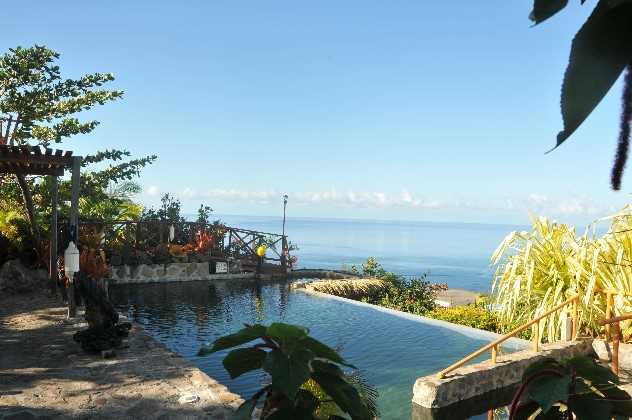
I was staying at the Champs hotel, high on the hillside, with a wonderful rainbow-framed view over the rooftops to the sea.
Talking with the long-time hotelier Lise Van de Kamp I asked about the roofless houses next door. That was Hurricane Maria, she said, after which their owners moved overseas. It was a common story: the 2017 hurricane damaged or destroyed 95 per cent of housing stock and was a watershed moment for many Dominicans, who saw no future on the island.
Gradually things have improved, but the older generation still hark back to happier days before the hurricane. Back then there were plantations, mostly bananas and cocoa, but Dominica’s testing terrain and riotous rainforest put paid to that. Today there is barely a sign that they existed, and yet the land is so fertile the locals warn you not to stand still “or you’ll grow roots”.
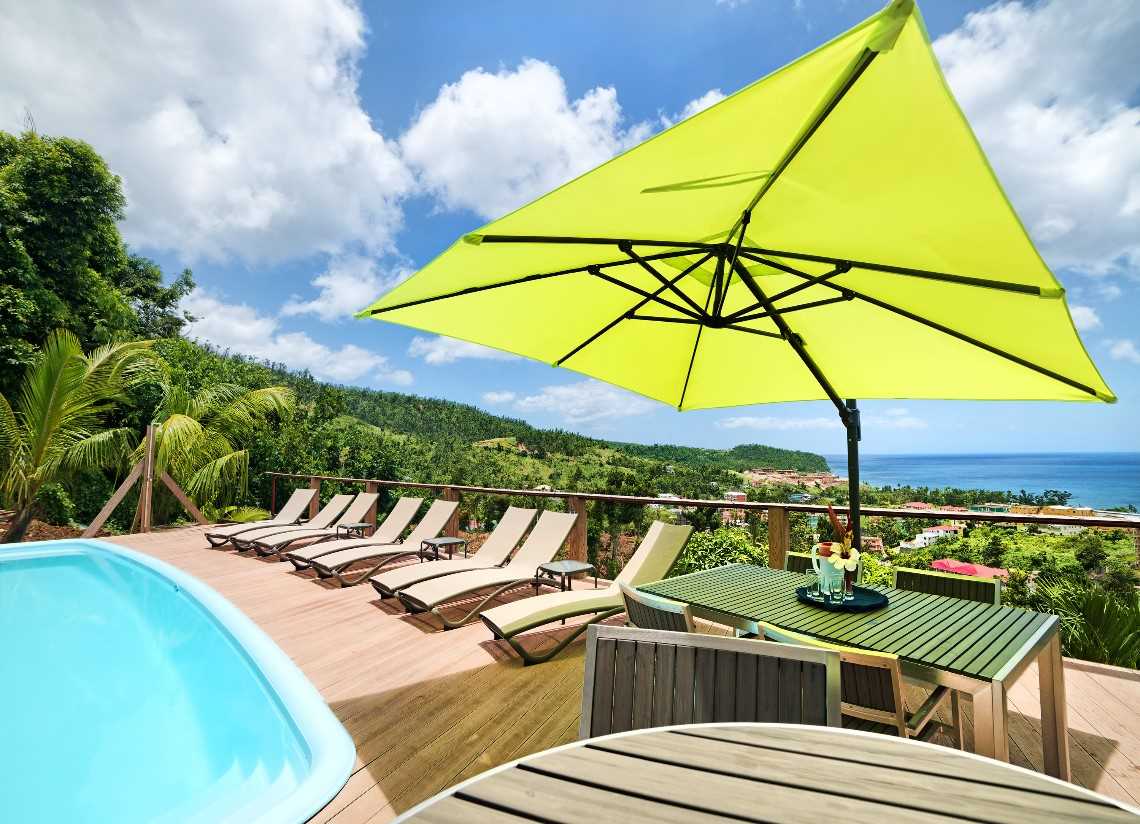
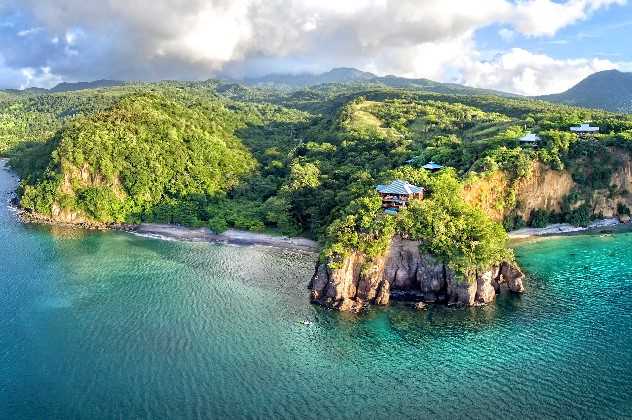
Now the economy is turning to tourism, to make a virtue out of all that exuberant nature. It includes nine active volcanoes, 365 freshwater rivers, one Boiling Lake, extravagant birdlife and countless waterfalls.
My first taste of the latter was that first morning, in the hills above Portsmouth. The path to Syndicate Falls is lined with fruit trees, guava, passion fruit and mango, busy with Sisserou parrots. A 15-minute hike, wading back and forth across the fast-flowing river, and you get to the falls, where water plunges 100ft into a choppy pool, creating its own little maelstrom. A swim here, pounded and exhilarated by all that thundering water, and I’d forgotten about the long flight.
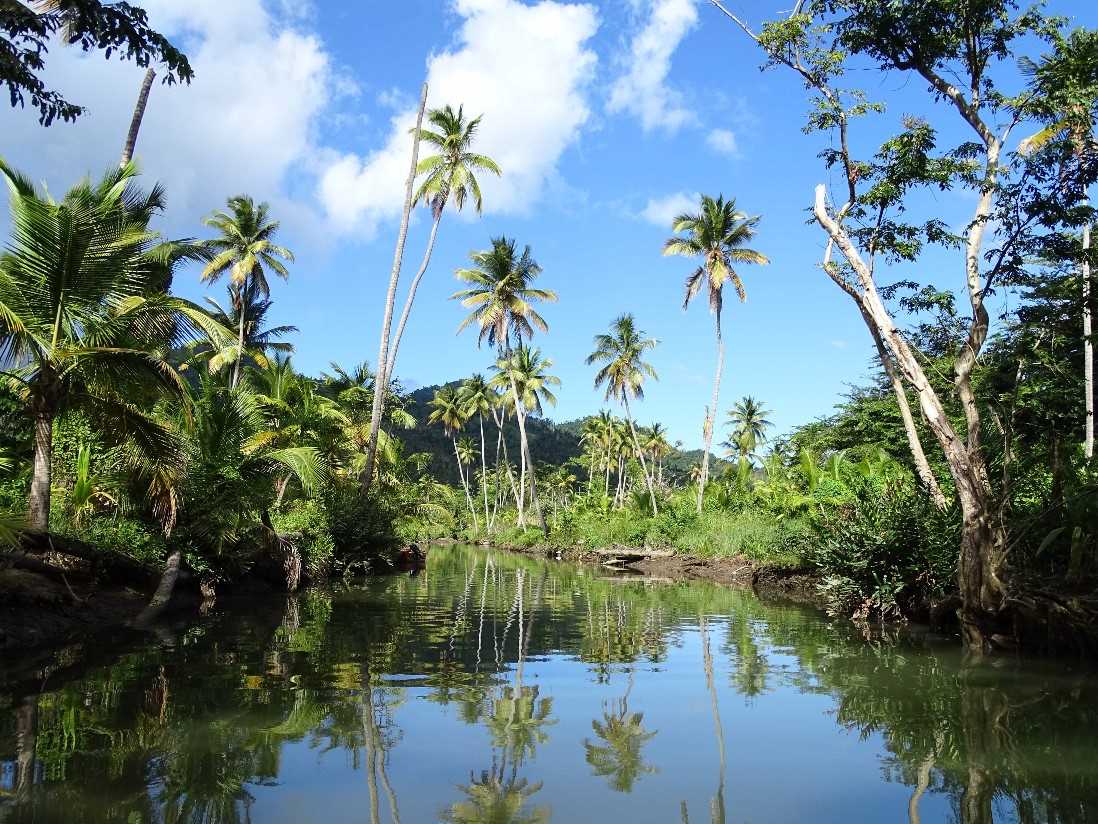
There was no one else at Syndicate, but I couldn’t say the same about the more mirror-calm waterway in Portsmouth. This Indian River featured in Pirates of the Caribbean: Dead Man’s Chest, so today boatmen row a steady stream of set-jetters through mangroves that gradually close in overhead, creating a magical world of giant root structures and ghostlike white crabs. We passed a shack on stilts — Calypso’s hut in the film — to a ramshackle bar where the “bush rum” costs £1.50 a glass. On the way back our boatman Ash fashioned hummingbirds out of reeds.
Heading southwest to Portsmouth
After Portsmouth I headed for Roseau, driven by Marcus via the wilder Atlantic coast. We crossed the giant scar that will be the new Chinese-built airport, ready in 2027, but quiet on a Sunday. We stopped for a waterside coffee in Calibishie, watching pelicans dive for fish and locals catch octopus just by the shore.
After the encounter with the rum-drinking pastor by Castle Bruce I baptised myself in Emerald River, another of the island’s waterfall pools. This one was calmer, prettier, more developed than Syndicate, and clearly within range of day-trippers off the cruise ships. By now it was evening, however, so I had it to myself.
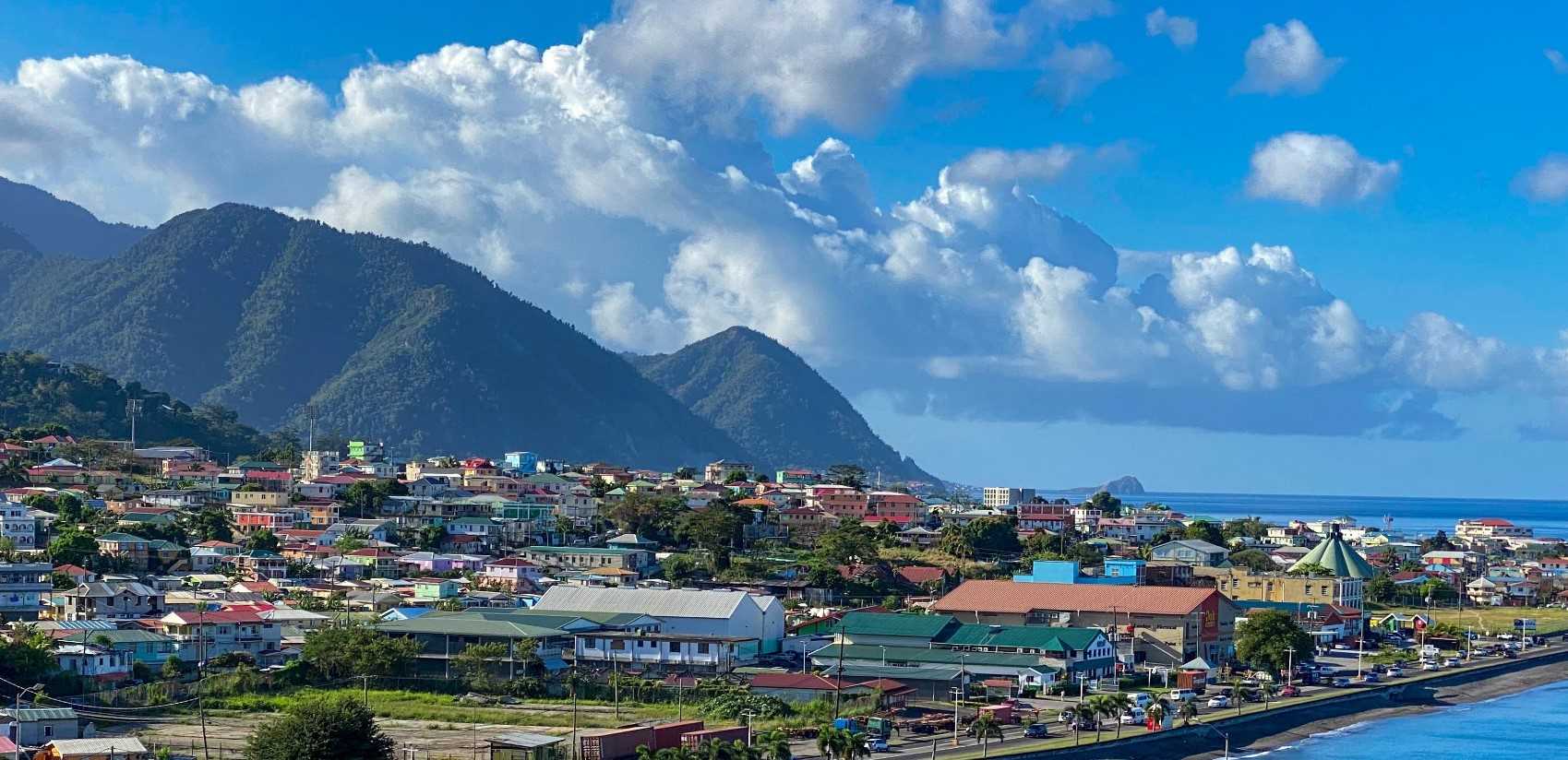
Those cruise ships tower over Roseau, which is basically a cheerful, colourful, expanded version of Portsmouth, with a sprinkling of multistorey blocks and a marine parade lined with souvenir stalls. Its best address is the Fort Young Hotel, a smart hotel in a converted 18th-century fort is popular with American divers, right by the cruise ship dock.
Roseau is a pint-sized town, and when two ships are in (the maximum capacity) they swell its population by about 50 per cent. It is this daily dose of customers who will be the main target for the cable car, whose base station is a 30-minute drive inland.
Dominica’s unique Boiling Lake, mostly just below boiling point, is a flooded volcanic fumarole, or vent, which up to now has been reachable only on an arduous hike, three hours each way. That is all about to change. The new cable car will effortlessly skim the rainforest canopy, crossing above a spectacular set of waterfalls to end on a hilltop beyond the Boiling Lake, from where you’ll be able to see both of Dominica’s coasts. A trail back down to the lake edge will always be guided, to ensure that there’s never a danger of anyone falling in.
At 4.2 miles, the ride is one of the world’s longest, and it uses Austrian equipment. It was meant to be operational by the end of 2025, but when I meet Oswald Graber, its Swiss boss, he estimates it will be fully operational by “the beginning of the next cruise ship season”, which is autumn 2026.
It’s a hugely ambitious project, as is the new geothermal plant next door, which will provide a big chunk of the nation’s electricity from March. It’s good to see investment revitalising an island that has been in the doldrums, but whether it’s the right kind of investment, only time will tell.
Hot springs and hummingbirds
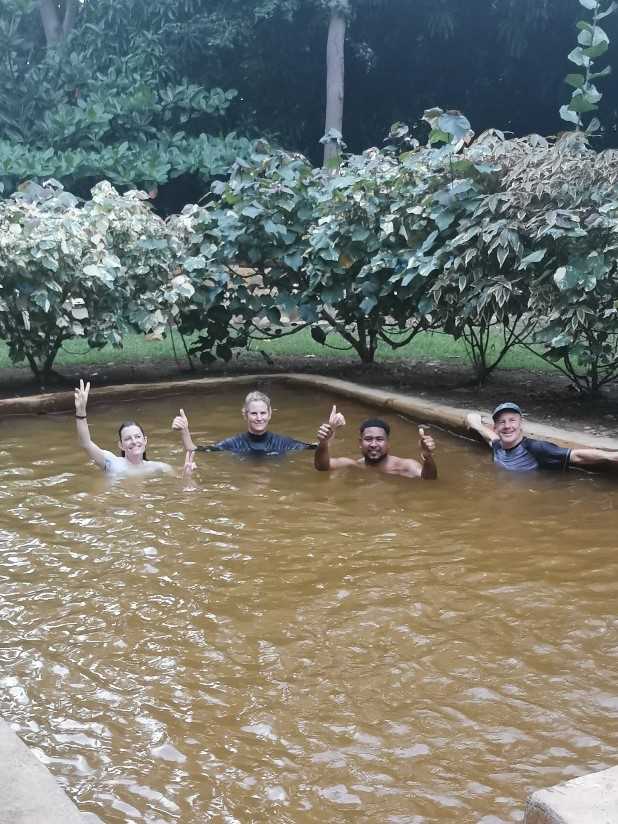
For my last stop on Dominica I return to its more endemic tourism. Just down the road from the geothermal plant is the village called Wotten Waven, in a niche in the hills that bubbles with hot springs. Here, half a dozen homespun spas have been dug out of the hillside. I choose Tia’s, its bamboo lodge overlooking a little river-lined glade filled with nutmeg, grapefruit and cocoa trees.
Below the lodge is a small tessellation of sulphurous pools, varying in temperature. I spend a couple of delightful hours in this onsen, soaking out all the potholes and watching the hummingbirds come and go on the red-flowered Powderpuff tree.
Luxuriating here, I find myself hoping that the new tribe of visitors attracted by the cable car don’t just dash in and out, bish-bosh. They would be missing some of the essence of Dominica: the Caribbean as it used to be.
Let us take you there
Andrew Eames travelled to Dominica with Sunvil. With our first-hand knowledge of the island and depth of local knowledge we can craft your perfect break. Call our destination specialists on 020 8568 4499 to learn more.